
Checking Criminal History in Orleans Parish
No single search produces every Orleans Parish record. Start with the question the record must answer. The Orleans Parish Sheriff's Office, or OPSO, shows current custody and booking data. The New Orleans Police Department, or NOPD, keeps its incident and arrest reports. Criminal District Court records show the counts prosecutors filed and how the court resolved them. Louisiana State Police holds the fingerprint-based state repository.
Use the following order to avoid treating an early allegation as a final result. A booking charge may change after District Attorney review, and a court outcome may take time to reach the state repository.
- Check OPSO Inmate Query for a recent booking or present custody.
- Request the police narrative from NOPD or the arresting agency that wrote it.
- Search Clerk Connect or Docket Master by defendant name or case number.
- Ask the clerk for the filed charge, disposition, or a certified copy.
- Use LSP Right to Review to inspect your own statewide Louisiana record.
Orleans Parish Record Custodians
The most common local error is asking the right question at the wrong office. New Orleans and Orleans Parish are coterminous, but their agencies remain distinct. Police create investigation files, the sheriff books and houses people, prosecutors screen charges, and courts keep judicial minutes and judgments.
| Record | Start Here | What It Establishes |
|---|---|---|
| Police report | NOPD Records | Reported event and investigation narrative |
| Booking | OPSO Inmate Query | Intake, custody, presented charge, and bond |
| State criminal case | Clerk Connect/Docket Master | Filed counts, court events, and outcome |
| Municipal or traffic case | Municipal and Traffic Court | City ordinance and traffic proceedings |
| Own statewide record | LSP Right to Review | Fingerprint-linked Louisiana repository entries |
Louisiana Official Background Checks
The Louisiana State Police Bureau of Criminal Identification and Information maintains the Louisiana Computerized Criminal History repository. It is not an unrestricted public people search. A person reviewing their own record uses the fingerprint-based Right to Review and begins an appointment through the Louisiana Applicant Processing System.
LSP states that the repository can include Louisiana arrests, dispositions, incarceration, and probation or parole bookings. It does not contain criminal records from other states. The standard authorization form lists a $31 state processing fee, including the technology fee, with $13.25 more for an FBI check when law permits or requires one. The live LAPS booking screen controls site and convenience charges.
The official BCII page shows how Right to Review and the state repository fit together.
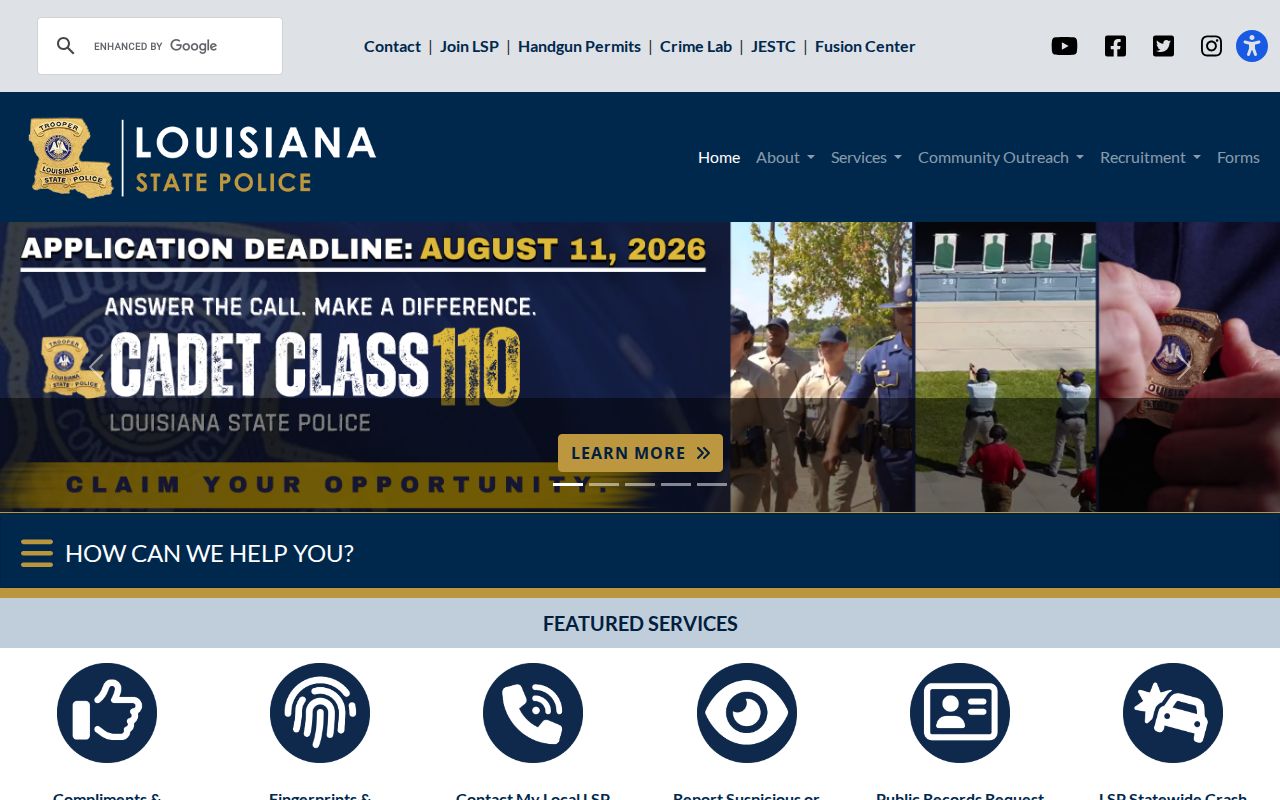
That state route answers a different question than an Orleans Parish court docket because it links events by fingerprints rather than presenting the full local case file.
Orleans Parish Justice Records Corridor
Several core offices sit near Tulane Avenue, but they are not one records counter. Criminal District Court and its clerk functions are at 2700 Tulane Avenue. Orleans Public Defenders is at 2601 Tulane Avenue, Suite 700. Orleans Justice Center is at 2800 Perdido Street. Municipal and Traffic Court sits apart at 1601 Perdido Street, while specialized NOPD records production is associated with 715 South Broad Street.
Criminal District Court
2700 Tulane Avenue
New Orleans, LA 70119
Filed criminal cases and certified court copies
Orleans Justice Center
2800 Perdido Street
New Orleans, LA 70119
OPSO booking and local custody records
Municipal and Traffic Court
1601 Perdido Street
New Orleans, LA 70112
504-658-8500
Criminal Record Types
Each record is a snapshot from a different stage. Reading them as interchangeable can turn an allegation into a false claim of conviction or hide a later dismissal.
- Incident report
- NOPD or another police agency's account of a reported event and investigation.
- Booking record
- OPSO's intake record showing custody facts and charges presented at booking.
- Docket Master
- The court timeline of filings, settings, pleas, rulings, disposition, and sentence.
- LACCH record
- Louisiana's fingerprint-linked repository compilation of reported state events.
- Capias
- A court-issued order that may appear as an event in the Orleans docket.
NOPD Criminal Records Requests
NOPD's Records and Identification Division keeps releasable police and accident reports, letters of good conduct, and local criminal-record products. Its Criminal Records Section works with AFIS fingerprints, while the Expungement Unit carries out signed court orders. Use the official NOPD records route for police narratives, not OPSO or the criminal clerk.
Describe an existing item with the incident number, date, place, record type, and a narrow date range. NOPD warns that broad “any and all” requests slow production. Its Subpoena Unit assigns a Record Room Number for all later contact, aims to process requests in 30 days, and may need added time for review by the District Attorney or City Attorney. NOPD does not transcribe tapes.
The request should also state whether inspection, an electronic copy, or a paper copy is preferred. Save the submission receipt and use the assigned Room Number when asking for status. Police reports can contain redactions for victims, witnesses, active investigative work, and protected identifiers. If NOPD did not create the record, identify the badge or agency on the incident paperwork. Port police, campus police, and other agencies may keep their own narratives even when OPSO handled the later booking.
Inside an Orleans Parish Criminal Record
A complete repository entry may show names and aliases, date of birth, state or FBI identifiers, the arresting agency, fingerprint transaction number, arrest date, charge and statute, court disposition, sentence, incarceration, and supervision. Public court and registry views omit protected fields. Social Security numbers, victim identities, juvenile material, expunged records, and active investigative intelligence are not ordinary public search fields.
Compare the repository line with the court file. A booking charge can be amended or refused, and a dismissed case can coexist with the old arrest event. For an error in your LSP record, obtain the certified disposition from the criminal clerk and use BCII's challenge process. The sheriff cannot rewrite a judgment entered by the court.
Orleans Parish Docket Master Search
Clerk Connect and Docket Master are the main public starting points for state criminal minutes in Orleans Parish. The official guide offers a defendant-name route, a case-number route, and a court calendar. Common names need extra care. Match the case number, court section, filing dates, charge history, and disposition before relying on a result.
| Search Field | Use | Caution |
|---|---|---|
| Last name | Name search | May return several people |
| First name | Narrows name results | Spelling and aliases can vary |
| Case number | Direct docket route | Use the Orleans number as printed |
| Court calendar | Date-based settings | A setting is not a disposition |
Online minutes help locate the case. Pleadings and certified judgments still come from the clerk. The full Orleans Parish criminal court case process separates a docket event from a final ruling.
Public Access Laws in Louisiana
Louisiana starts with a right to inspect public documents, then applies record-specific limits. A focused request for an existing record is more useful than asking an office to create a report or answer a broad research question.
Key access rules: R.S. 44:1 defines public records and custodians; R.S. 44:31-33 governs access, requests, and copies; R.S. 44:3 protects specified active-investigation and security material; R.S. 15:579 limits juvenile dissemination; and R.S. 15:588 gives individuals a Right to Review their own state record.
Ask for inspection when cost matters. If part of a record is exempt, request the releasable portion and a written citation for each withheld part. Keep the request, response, dates, and fee estimate.
Custodians may charge lawful reproduction costs, but an office does not have to build a new research product from its files. Active criminal investigations, confidential informants, security procedures, medical data, and some corrections records can remain closed. Public access can also change as a case moves from investigation to final adjudication. That is why the same request may yield a police report with redactions, a public court minute, and no access to internal jail notes.
Orleans Parish Jail and Custody Checks
OPSO Inmate Query is the first stop for current local custody. It can show booking identifiers, intake date, charges presented, bond, housing, and release information. A missing current result does not prove there was no arrest. The person may have been released, transferred, booked under a different spelling, or moved into state custody.
After a transfer, use LA VINE or the Louisiana Department of Public Safety and Corrections locator phone line. LA VINE also offers custody and supervision notice options. The Orleans Justice Center is not the custodian of the NOPD narrative or the final court judgment. Those remain with police and the court.
For a historical booking that no longer appears, send OPSO a focused Louisiana Public Records Law request with the date range, booking or incident number, and desired format. Ask for a cost estimate before authorizing copies. Family members with a current medical concern have a separate OPSO Medical Inmate Advocate line at 504-202-9451; it is not a general records desk. Mail, funds, visitation, and medical channels answer service questions, while Inmate Query and the records custodian answer record questions.
Sealed, Expunged, and Restricted Records
Louisiana expungement removes a qualifying record from public access but does not physically destroy every authorized copy. Eligibility depends on the arrest result, offense, prior history, completed sentence or probation, waiting periods, and statutory exclusions. Start with a certified disposition, then file in the court that handled the matter: Criminal District, Magistrate, Municipal, or Traffic Court.
The NOPD expungement instructions route Orleans Parish cases among those courts. The statutory aggregate fee can reach $550, though no-fee grounds and waivers may apply. NOPD reports six to eight months to process an adult-arrest order it receives and up to twelve months for clearance across agencies.
The official local instructions show why the signed order must identify each agency and case correctly.
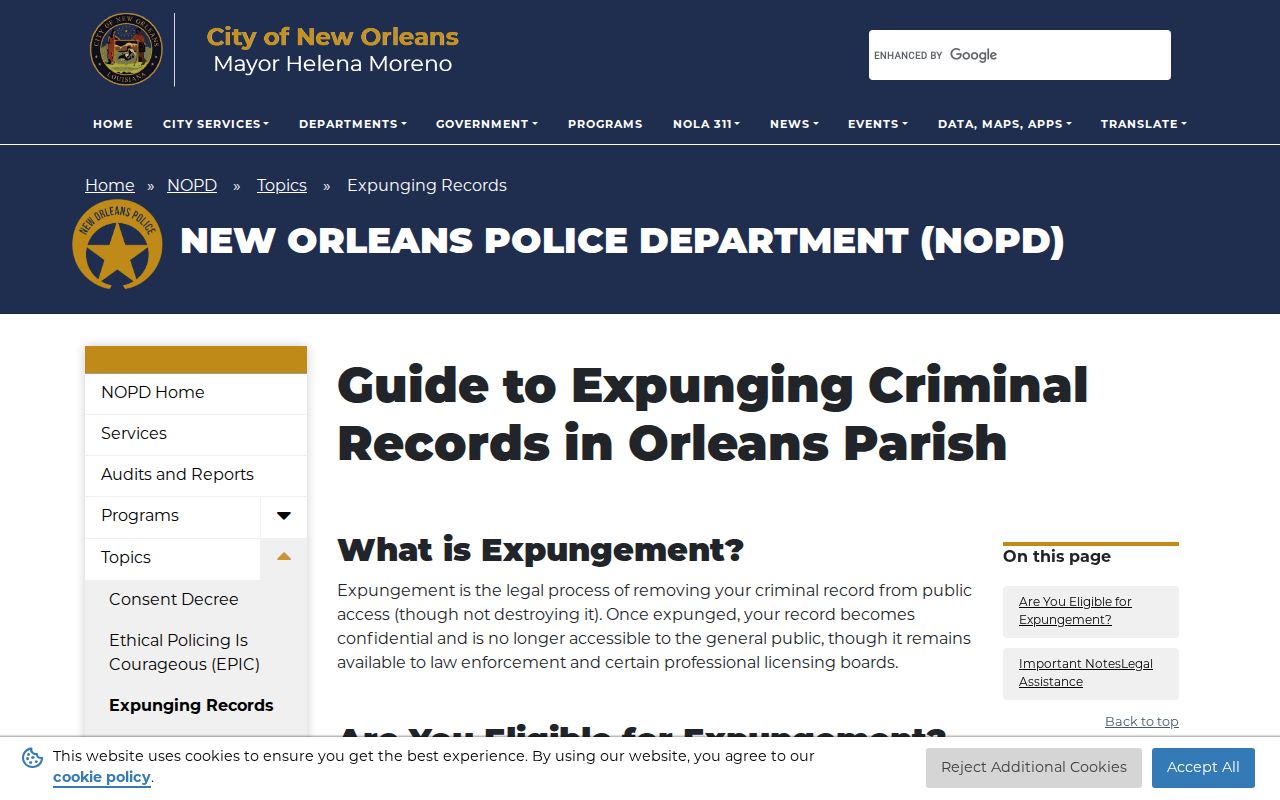
A completed order can still remain visible to criminal justice agencies and other users whom Louisiana law expressly authorizes.
Federal Criminal Records in New Orleans
Federal cases do not appear in Orleans Parish Docket Master. The U.S. District Court for the Eastern District of Louisiana sits at 500 Poydras Street, and PACER supplies federal docket access. Federal custody is searched through the Bureau of Prisons locator. An FBI Identity History Summary is a fingerprint-based federal self-review, not a substitute for a local court file.
The Eastern District of Louisiana site is the official court entry point.
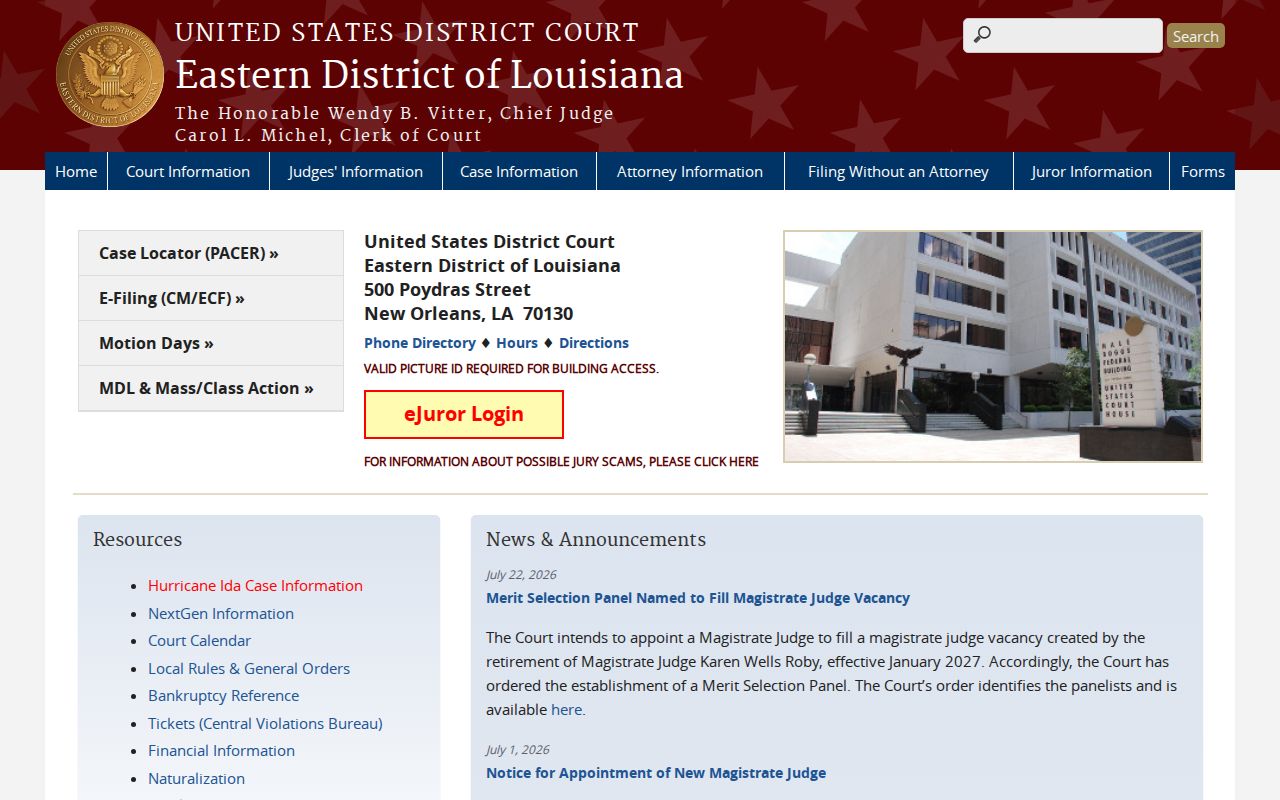
Use the forum named on the charging document, since state and federal records follow separate clerks, docket systems, and custody paths.
Orleans Parish Warrants and Supervision
No complete public citywide warrant list was verified. A capias or bench warrant may appear in Docket Master, but confirm it with the issuing court before acting. NOPD and OPSO can hold agency-created records, while the court controls the order itself. For your own possible warrant, direct court confirmation is safer than relying on an old docket line.
Probation and parole are state-run through the Louisiana DPS&C Division of Probation and Parole. Court minutes show the sentence and revocation litigation; LA VINE may show current supervision. The Committee on Parole makes parole decisions. Most internal corrections files remain confidential under R.S. 15:574.12, though limited facts may be public.
A warrant line in a docket can be followed by a recall, bond action, or later setting, so read the events in date order. Likewise, probation appears in both court and corrections systems for different reasons. The sentencing minute states what the judge imposed. DPS&C records show supervision administration, and a later revocation dispute returns to the court file. Matching the case number across those sources is more reliable than matching a name alone.
Orleans Parish Criminal Records by City
New Orleans is the only incorporated city in Orleans Parish. Neighborhoods such as Algiers, Gentilly, Mid-City, and the French Quarter are not separate municipalities, so they share the same city and parish record channels. Census QuickFacts lists 383,997 residents in 2020 and an estimated 362,701 on July 1, 2024.
New Orleans Criminal Records
One city and one parish, with separate police, sheriff, criminal-court, and municipal-court custodians.
Orleans Justice Center Oversight Records
The Orleans Justice Center has operated under a federal consent decree since 2013. That makes federal pleadings and monitor reports important official sources for jail staffing, safety, health care, classification, and physical conditions. They explain institutional operations; they do not replace a person's booking record or criminal case file.
Recent jail events, including the May 2025 escape and the security response, produced added review. Date each report and use the issuing agency's release because oversight remains active. Older OPSO pages may also show past leadership branding after the May 2026 sheriff transition.
Orleans Parish Registry Records
The Louisiana State Sex Offender and Child Predator Registry is a public safety system, not a general criminal-history database. Search by name, address, ZIP code, parish, or map through the state registry, and use NSOPW when an address or person may cross state lines. OPSO handles local registration duties at the Orleans Justice Center.
Registry profiles omit victim names, Social Security numbers, nonconviction arrests, and other protected fields. Use the Orleans Parish sex offender search for the official search fields, tier periods, alert options, and lawful-use limits.