
Sex Offender Checks in Orleans Parish
The Louisiana State Police registry entry is the main public channel for an Orleans Parish sex offender search. LSP's Bureau of Criminal Identification and Information maintains the Louisiana State Sex Offender and Child Predator Registry. Searchers can filter statewide data by a name, New Orleans address, ZIP code, or Orleans Parish. The Orleans Parish Sheriff's Office is the local registration authority, but no separate OPSO public registry or verified app-only registry alert was found in the official research. The state portal therefore remains the public starting point.
Start with the most reliable detail available. A full or partial name can locate a known person. An address and radius help with a neighborhood check, while the parish and ZIP controls help define a broader area. Results may change after a move or verification update. Compare more than a name before drawing a conclusion, and use the status and last-update fields to judge how current a profile may be.
The official Louisiana State Police screen shows where the state registry search begins.
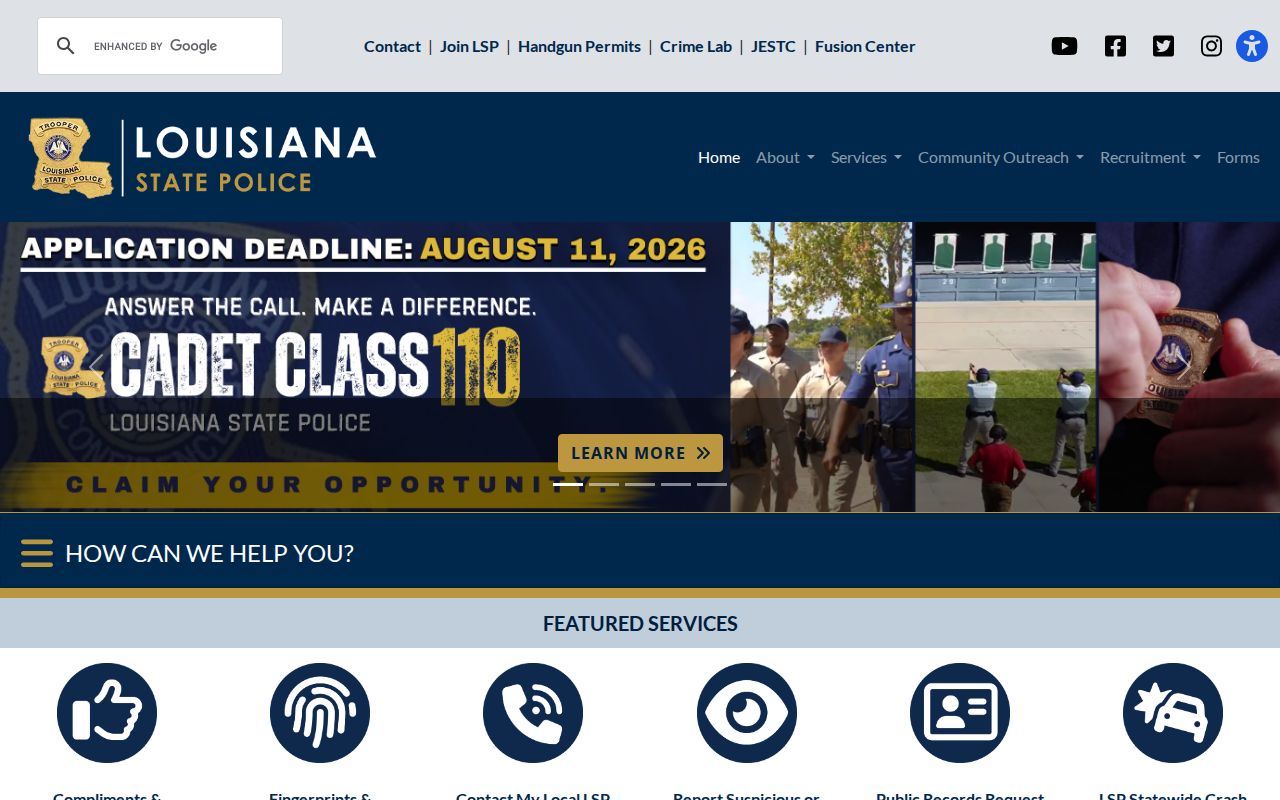
That state entry routes Orleans Parish searches to the public registry and its lawful-use terms.
Orleans Parish Registry Office
OPSO carries the parish-level registration role at 2800 Perdido Street, New Orleans, LA 70119. That is also the Orleans Justice Center address, so a visitor should confirm the exact registry counter, current hours, and whether an appointment is needed before going. Official sources did not identify a direct registration-unit phone or a fixed public counter schedule. The absence of those details is a reason to confirm with OPSO, not to rely on an unofficial directory.
Registrants use the local authority for duties tied to changes in residence, work, school, vehicles, and online identifiers. The deadlines are set by Louisiana law and can be strict. For addresses inside incorporated New Orleans, NOPD also receives statutory notice. Local officials send updates electronically to BCII, which maintains the public statewide record. A public searcher should report suspected noncompliance to OPSO, LSP, or local law enforcement rather than trying to verify compliance in person.
How to Search the Louisiana State Sex Offender and Child Predator Registry
An Orleans Parish registry search can use a known identity or a place. The place route is useful for community awareness, while the name route helps distinguish a specific profile. Accept the registry's use conditions and keep the search broad enough to account for spelling, aliases, or a nearby ZIP. Then narrow the result with the profile itself.
- Open the LSP-linked registry and choose a name search or geographic search.
- Enter the known name, or use an address, New Orleans, ZIP code, Orleans Parish, and radius controls as needed.
- Compare the map and list results, then open a likely profile and check its photo, aliases, physical details, and status.
- Read the offense jurisdiction, conviction date, registration period, and last update without inferring facts the profile does not publish.
| Field Label | Type | Required | Notes |
|---|---|---|---|
| Last Name | Text | Name route | Use with first name when known |
| First Name | Text | No | Narrows a name search |
| Address | Text | Address route | Use with city, state, and ZIP as accepted |
| City / Parish / ZIP | Text or select | No | Choose New Orleans or Orleans Parish for local results |
| Radius | Select | Address route | Portal controls set the geographic area |
| Map / List | View control | No | Switches between location and result views |
| Get Notified | Link or form | No | Creates geographic or ZIP email alerts |
Orleans Parish Registry Alerts
Louisiana's “Get Notified” option adds an important channel beyond a one-time Orleans Parish sex offender search. R.S. 15:542.1.5(B) directs the registry to support automatic email notice when a registered residence, work location, or school begins within a selected geographic area. A user can choose a radius or ZIP-based area and receive later updates. This can reduce the need to repeat the same map search, though it does not guarantee that every move will appear at once.
Alerts should be paired with calm review. Check the linked profile, update date, address type, and status before acting on a notice. The registry map presents reported locations; it does not measure real-time presence. If the information suggests a registration failure, send the concern to OPSO or LSP. Call 911 only when there is an immediate emergency.
Inside a Registry Profile
A Louisiana registry profile combines identity markers, registration facts, and conviction-based data. It is not a full Orleans Parish criminal history. Public fields help a searcher compare the right record and understand the source of the registration duty. The official profile can show location and employment or school information when those fields are public under the scheme, along with vehicles and other identifying details when displayed.
| Name & Aliases | Current name and reported alternate names used to distinguish records |
|---|---|
| Photo & Description | Current photograph plus sex, race, age or birth date, height, weight, hair, eyes, scars, marks, and tattoos |
| Registered Locations | Residence and, when public, employment and school locations |
| Offense Details | Qualifying offense, jurisdiction, statute or description, conviction date, and authorized victim-age category |
| Vehicles | Vehicle and license details when the public interface displays them |
| Status & Period | Registering parish, compliance status, last verification or update, and required registration period |
Louisiana law excludes victim names, Social Security numbers, arrests that did not lead to conviction, and travel or immigration papers. Ordinary phone, email, and online identities are not openly displayed. A separate state match feature can indicate whether certain contact or online identifiers are linked without revealing the registrant's identity.
Orleans Parish Cross-State Search
Use the Dru Sjodin National Sex Offender Public Website when a person, address, or safety concern may extend beyond Louisiana. NSOPW searches participating state, territorial, and tribal public registries from one federal interface. It adds reach, but Louisiana's own registry remains the better source for the detailed Orleans Parish profile and state-specific status.
The national search screen illustrates the broader route for an Orleans Parish registry concern.
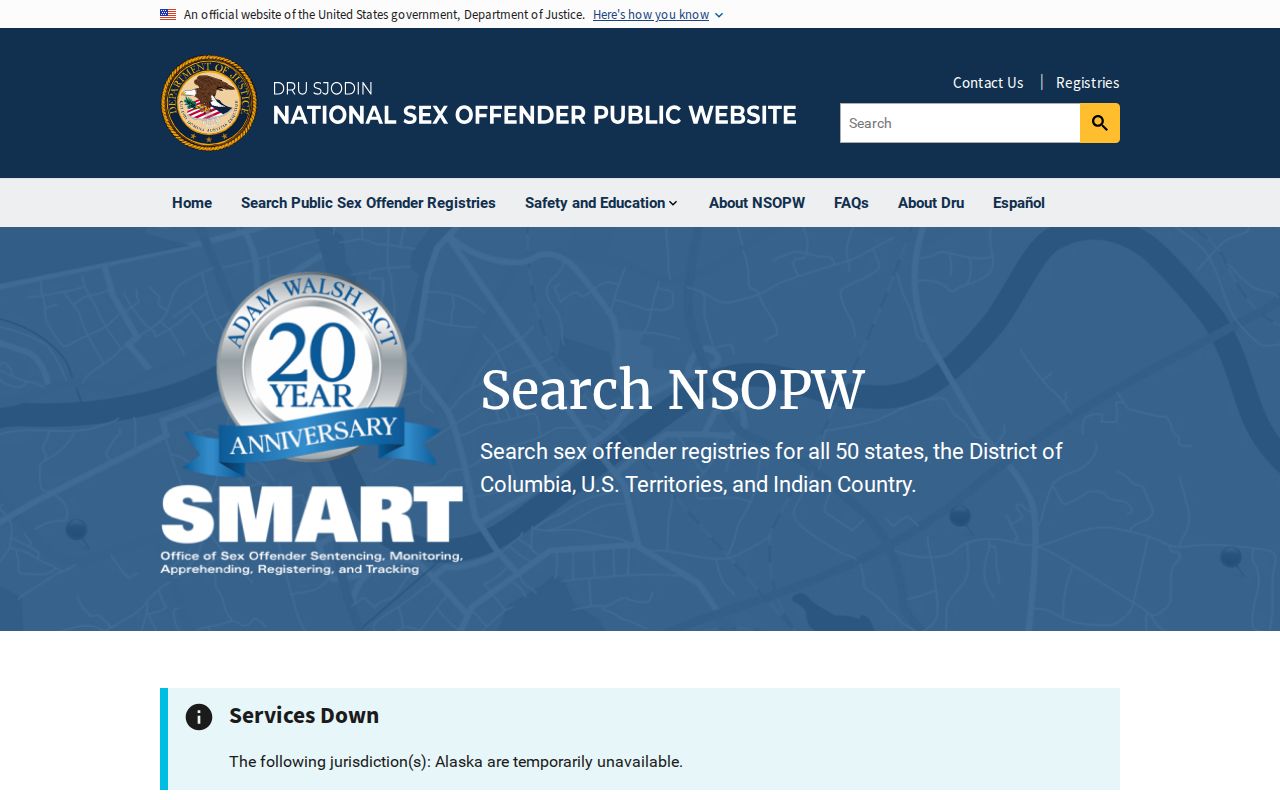
If a participating jurisdiction is temporarily unavailable, follow NSOPW's source-jurisdiction link and repeat the search there.
Louisiana Registration Levels and Requirements
Louisiana uses offense-based statutory groupings and periods under R.S. 15:544. The tier is not simply a public risk score. Conviction date, amendments to the law, juvenile provisions, and the treatment of an out-of-state offense can change the answer. Do not assign a tier from the offense label alone. The statute and the registering authority control.
| Level / Tier | Typical Duration | Verification Concept |
|---|---|---|
| Tier I | 15 years | Periodic in-person renewal and required change reports |
| Tier II | 25 years | More frequent statutory verification |
| Tier III | Life | Highest-frequency, lifetime registration |
These are broad guideposts, not a finding about any person. R.S. 15:544 and the related R.S. 15:542 provisions contain the exact offense lists, frequency rules, reductions, and exceptions. Registrants should obtain current instructions from OPSO rather than rely on a public profile alone.
Orleans Parish Registry Versus LA VINE
The Louisiana DPS&C registry explanation helps separate registration from supervision. DPS&C Probation and Parole supervises some registrants, but not all. LA VINE can show custody or community supervision. It cannot replace an Orleans Parish registry search, since registration can continue when a person is not incarcerated or under active supervision.
The DPS&C screen places registry administration and correctional supervision in their proper roles.
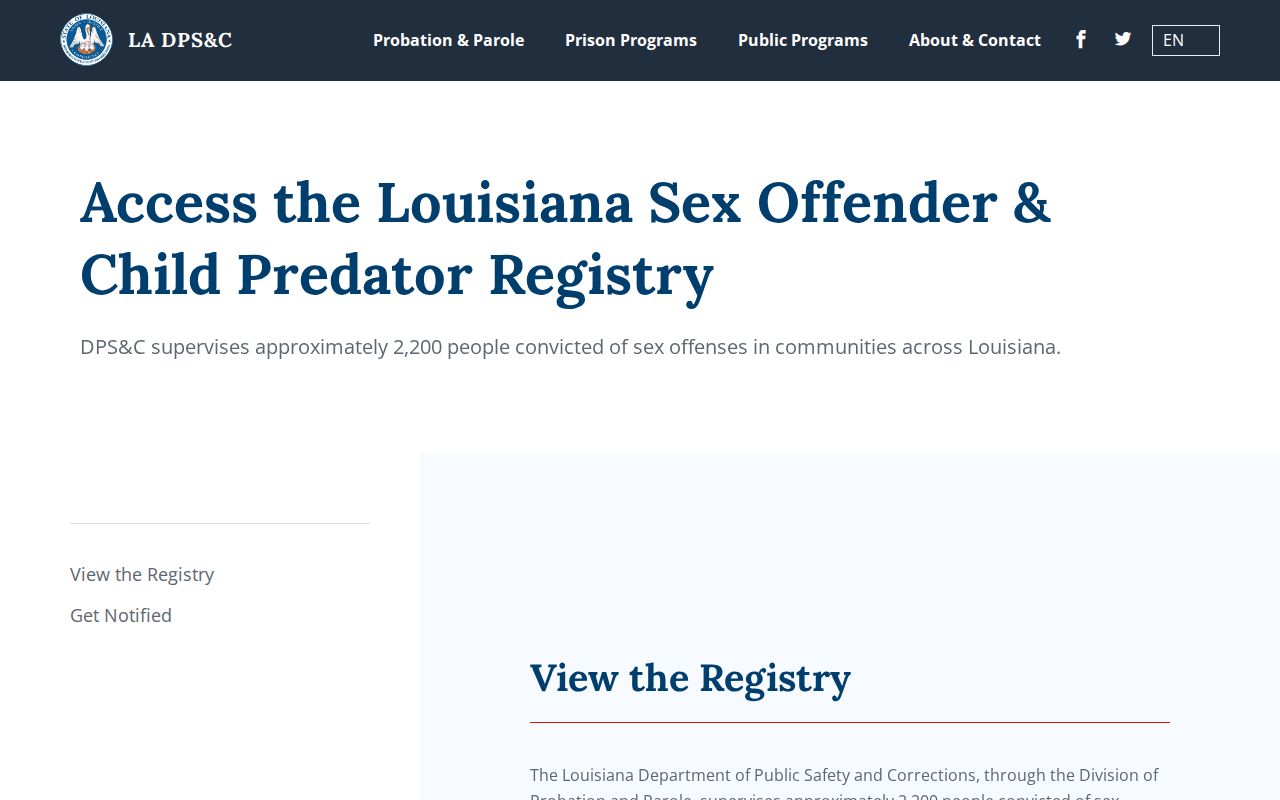
For public registry status, return to LSP. Use LA VINE only for its separate custody and supervision purpose.
Orleans Parish Registry Map Limits
A dot on the registry map is not a legal opinion about where someone may live, work, or be present. Louisiana restrictions depend on the offense, the governing statute, and the type of protected place. R.S. 14:91.1 and related registration provisions may matter, but a map result alone cannot establish compliance or a violation. Boundaries, radius settings, reporting dates, and address changes also affect what a viewer sees.
Use an Orleans Parish registry map for geographic awareness. For a legal question about a specific location, read the current statute and verify the address through the proper authority. Do not confront a person because a pin appears near a school, park, or other site.
Community Notification and Lawful Use
The Louisiana registry exists for public safety, awareness, and community notification. LSP and BCII maintain the public system, OPSO receives and transmits local registration updates, and NOPD receives notice for incorporated-city addresses. Those roles do not authorize private enforcement. Report credible registration concerns to an official agency and let trained staff assess the facts.
Registry misuse is unlawful: Under La. R.S. 15:542.1.5, registry information may not be used to harass, threaten, intimidate, damage property, or commit a crime against a registrant or household. Use public data for safety and lawful awareness, never vigilantism or discrimination.
Public data can be incomplete or delayed. Compare the profile, update date, and official source before relying on it. An urgent threat belongs with 911. A suspected reporting violation belongs with OPSO, LSP, or NOPD through the appropriate nonemergency channel.