
Orleans Parish Criminal Court Cases
The Criminal District Court for the Parish of Orleans has exclusive jurisdiction over state criminal offenses in Orleans unless the law places a matter elsewhere. Its trial sections and Magistrate functions handle filed felony and state misdemeanor cases. The clerk at 2700 Tulane Avenue keeps the pleadings, minute entries, docket sheets, judgments, and certified copies. A police report or jail booking can help identify an event, but neither replaces the clerk's account of what the prosecutor filed and how the court resolved each count.
Case numbers tie the parts of an Orleans Parish court file together. Use the exact docket number when requesting a charging instrument, sentencing minute, or certification. A defendant-name result can point to several people or cases, so compare the filing date, charge, and court section before drawing a conclusion. Juvenile Court proceedings are generally confidential and are not an ordinary public name-search channel.
Orleans Criminal Court Routes
Not every local allegation belongs in Criminal District Court. New Orleans Municipal and Traffic Court at 1601 Perdido Street handles city ordinance and traffic matters. Its clerk and the City Attorney are the useful contacts for many city prosecutions. The court's main number is 504-658-8500, with a municipal service line at 504-658-9700. A blank Criminal District Court search does not rule out a case in this separate system.
Appeals split off as well. Check the Louisiana Fourth Circuit Court of Appeal and the Louisiana Supreme Court when the trial docket points to appellate review. Federal charges in the Eastern District of Louisiana never become an Orleans Criminal District Court case. Court jurisdiction is the first fact to settle, because the wrong clerk cannot certify another court's file.
Searching Orleans Parish Case Records
Clerk Connect and OPSO Docket Master are the main public starting points for Orleans Parish criminal case records. The official city walkthrough identifies a Criminal & Traffic Minute Search and a Court Calendar. Search results help locate the docket number, court section, next setting, charge history, and disposition. They do not promise that every pleading can be downloaded.
The City of New Orleans Clerk Connect walkthrough shows both name and case-number routes. Begin with the docket number when one is printed on a notice or prior minute. It is more exact than a name. With names, use the spelling shown on court papers and treat every match as unconfirmed until the case details align.
- Choose defendant-name search when the docket number is unknown.
- Enter the surname and given name, then compare reasonable supported name variants.
- Match results by docket number, filing date, charge, and court section.
- Open the event history and read entries in date order.
- Request the exact document or certified copy from the proper clerk.
| Field Label | Type | Required | Notes |
|---|---|---|---|
| Defendant Name | Search mode | One route | Use when the docket number is unknown |
| Last Name | Text | Name route | Common names may return false matches |
| First Name | Text | Optional | Narrows name results |
| Case Number | Text | Alternate route | The most precise search key |
| Court Calendar | Link or tab | No | Shows scheduled matters by date or section |
Note: Calendar dates can change, so confirm a setting with the clerk or counsel before relying on an online entry.
Reading Orleans Docket Master
Docket Master reads as a timeline, not a one-line verdict report. Early entries may show an arrest item, bond action, prosecutor screening, or a filed bill. Later entries can record arraignment, counsel enrollment, motions, continuances, pleas, a trial result, sentence, probation, or revocation. The status of one count may differ from another count in the same Orleans Parish court case.
- Bill of information
- A charging document filed by the prosecutor.
- Indictment
- A charging instrument returned through grand-jury action.
- Nolle prosequi
- The prosecution declined or dismissed that charge at that stage; it is not a conviction.
- Capias
- A court order for arrest, often tied to a missed appearance or supervision issue.
- Section
- The courtroom or judicial division assigned to the case.
A capias entry deserves care. The event may show that an order was issued or recalled, but a public docket is not a guarantee of current warrant status. Contact the clerk or counsel for the case rather than acting on an old line in the event history.
Inside an Orleans Parish Case File
The clerk's case file is the best source for the charge actually filed, the events before the judge, and the final count-level result. Online minutes often supply enough detail to identify the document needed. Full pleadings, exhibits, and authenticated records may still require inspection or an order from the clerk.
| Case Number & Court | Identifies the docket, assigned court section, and local court. |
|---|---|
| Charging Document | Shows the bill of information or indictment and the filed counts. |
| Docket Entries | Records motions, counsel, continuances, subpoenas, bond, and courtroom events. |
| Hearing Dates | Lists settings and event types; current times should be confirmed. |
| Disposition & Judgment | Reports a plea, verdict, dismissal, acquittal, or other result by count. |
| Sentence & Conditions | May state confinement, suspended time, probation, costs, or court conditions. |
Use a certified disposition when correcting a mismatch in a Louisiana repository record. The court outcome cannot be rewritten by the sheriff merely because an earlier booking charge now differs from the filed count.
Orleans Court Diversion Outcomes
The Orleans Parish District Attorney screens cases before and after filing. A charge presented at booking may be refused, amended, diverted, or filed under a different count. OPDA also operates a voluntary, no-fee adult pretrial diversion program. Participation is not the same event as a conviction, and the docket must be read through the latest court and prosecution entries to understand the result.
The Orleans Parish District Attorney explains its diversion program and the choices that can occur before a conventional prosecution reaches judgment.
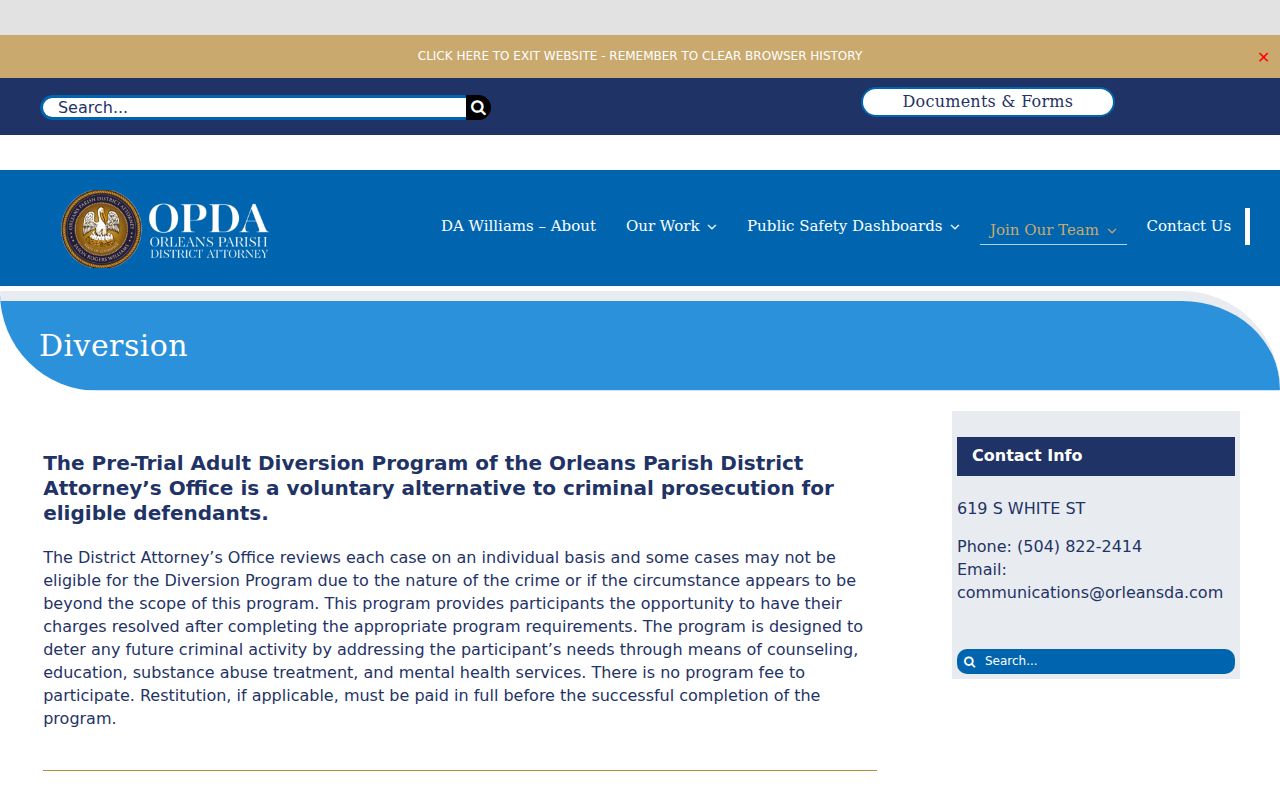
This view reinforces why screening, diversion, and a later nolle prosequi must be distinguished from a guilty disposition in the court file.
How a Criminal Case Moves
An Orleans Parish criminal case can begin after arrest, but the court record takes shape when a charging document is filed. Arraignment records the plea. Pretrial work can include discovery, motions, bond review, status conferences, and continuances. A plea or trial leads to a count-level disposition, and a conviction may then produce a separate sentencing entry.
Case flow: Charges Filed › Arraignment › Pretrial › Plea or Trial › Disposition › Sentencing
The order is useful, though real dockets are not always neat. Counts can be amended or dismissed, settings can move, and sentencing can occur on a later date. Read each dated minute before treating an early charge as the final result.
Federal Cases Beyond Orleans Court
Federal criminal matters in Orleans Parish are filed in the U.S. District Court for the Eastern District of Louisiana. They do not appear as state cases in Orleans Docket Master. The federal clerk is at the Hale Boggs Federal Building and Courthouse, 500 Poydras Street. PACER searches federal dockets by party or case number and requires registration.
The federal judiciary provides PACER for official docket access, which is the right route when the prosecuting authority or case number is federal.
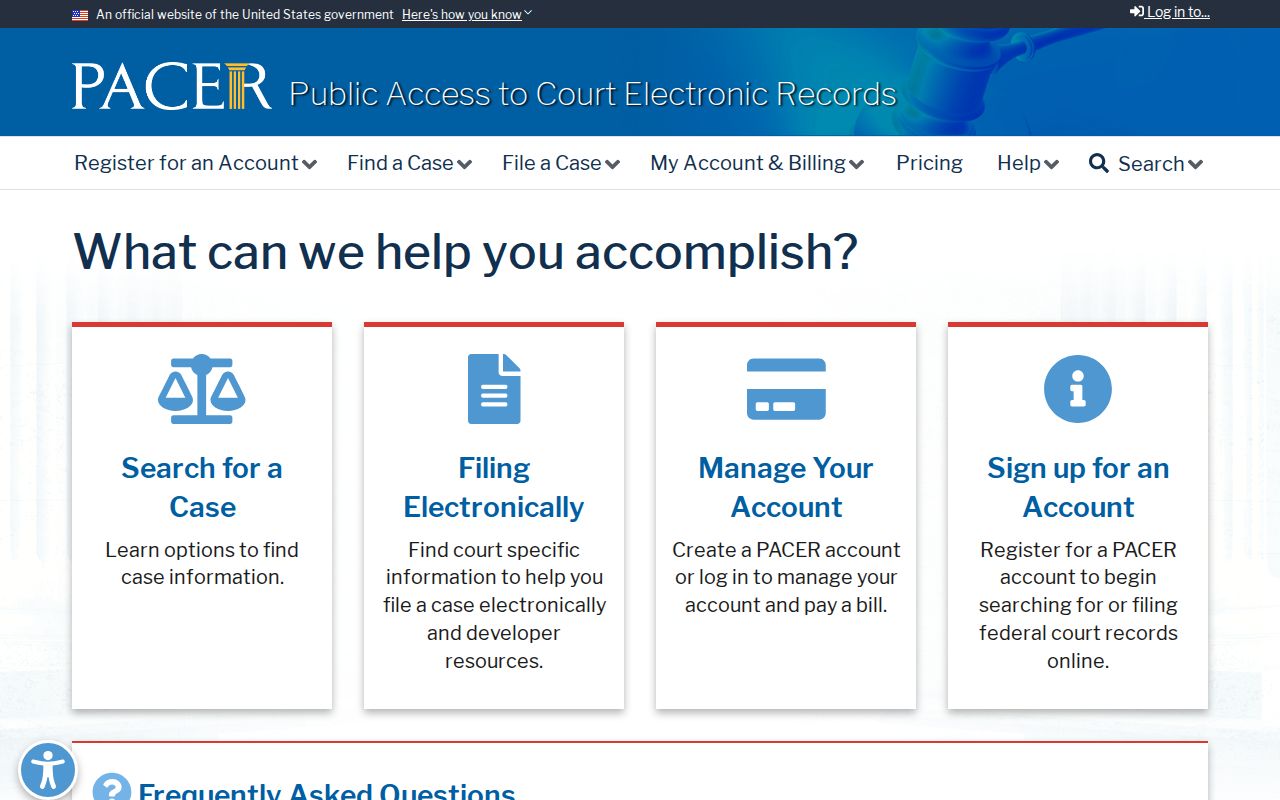
The separate federal search prevents a false no-result when someone checks only the Orleans Parish state court portal.
Case Record Access & Restrictions
Louisiana law starts from a right to inspect public records, but that right has limits. Active investigative evidence, confidential sources, security procedures, and protected victim details may be withheld or redacted. Juvenile matters, sealed or expunged records, grand-jury material, presentence reports, and some exhibits do not become public merely because a related minute appears online. A public-record request cannot override a court order or confidentiality law.
Ask for an identifiable existing record. Give the Orleans Parish clerk the docket number, document name, and date of the minute when possible. Request inspection if cost matters, and ask for a fee estimate before copies or certification. No stable official certification fee was found in the project research, so confirm the current price with the clerk.
A court search also has a firm scope limit. It shows the Orleans Parish case and its procedural history, not a complete Louisiana arrest record. The state's LACCH repository is based on fingerprint events reported from across Louisiana and can include arrests, dispositions, incarceration, and supervision. Public access to that system is limited by dissemination law. Someone reviewing their own statewide record should use the fingerprint-based Louisiana Right to Review, then take a certified court disposition to BCII if an Orleans outcome is missing or does not match.
Orleans Criminal Clerk Fallbacks
If Clerk Connect or the embedded Docket Master does not load, the clerk counter remains the direct route for Criminal District Court records. The Orleans criminal clerk's official page is the place to confirm current access details. Call or visit 2700 Tulane Avenue with the exact docket number and a focused description of the document. Confirm hours, security rules, and closures before travel. For city charges, use Municipal and Traffic Court instead. Older off-system files may need staff retrieval.
Louisiana has no single free statewide trial-court portal that replaces these Orleans Parish channels. A focused Louisiana Public Records Law request may help with a releasable record, but it must go to the custodian that created or holds it. Online minutes guide the search. The clerk supplies the filed document or certification.
For paper exhibits or an older file, describe the item instead of asking staff to research a person. State the docket, the party name as shown, the date range, and the exact minute or pleading. Ask whether inspection is possible before ordering copies. Keep the clerk's reply and any fee estimate with the case number because that record makes a later follow-up easier.